
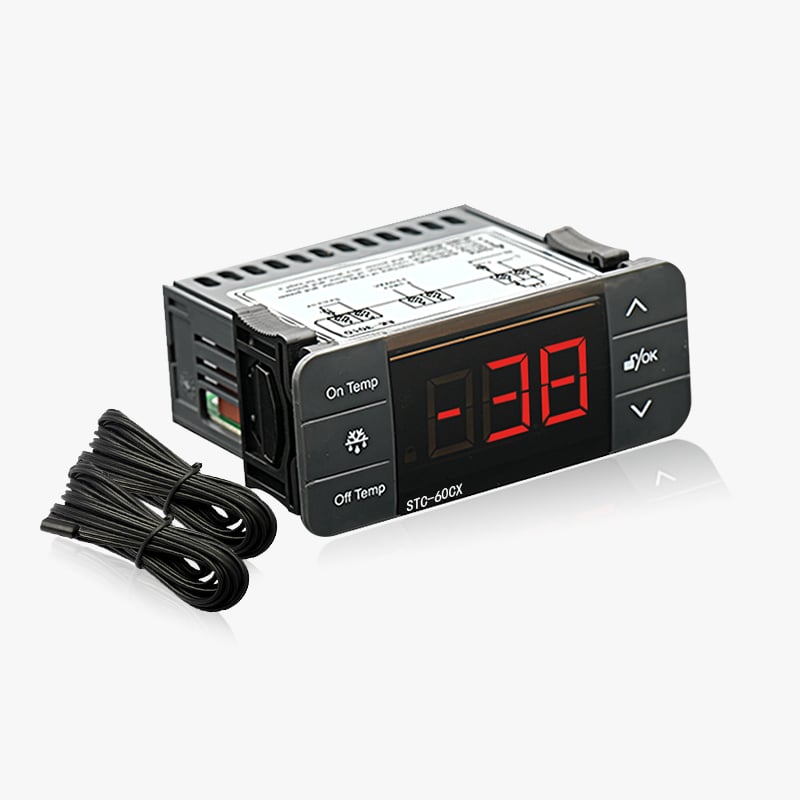
The STC-1000 has long served as a budget-friendly option in commercial refrigeration, but many facility managers and HVAC professionals now recognize that investing in a superior temperature controller delivers measurable advantages in precision, reliability, and operational efficiency. A more advanced temperature controller can significantly reduce energy costs, minimize product loss, and eliminate the frustration of temperature fluctuations that damage inventory and compromise food safety compliance. Understanding what defines a better temperature controller and how to evaluate alternatives is essential for any business managing refrigerated storage or commercial cooling systems.
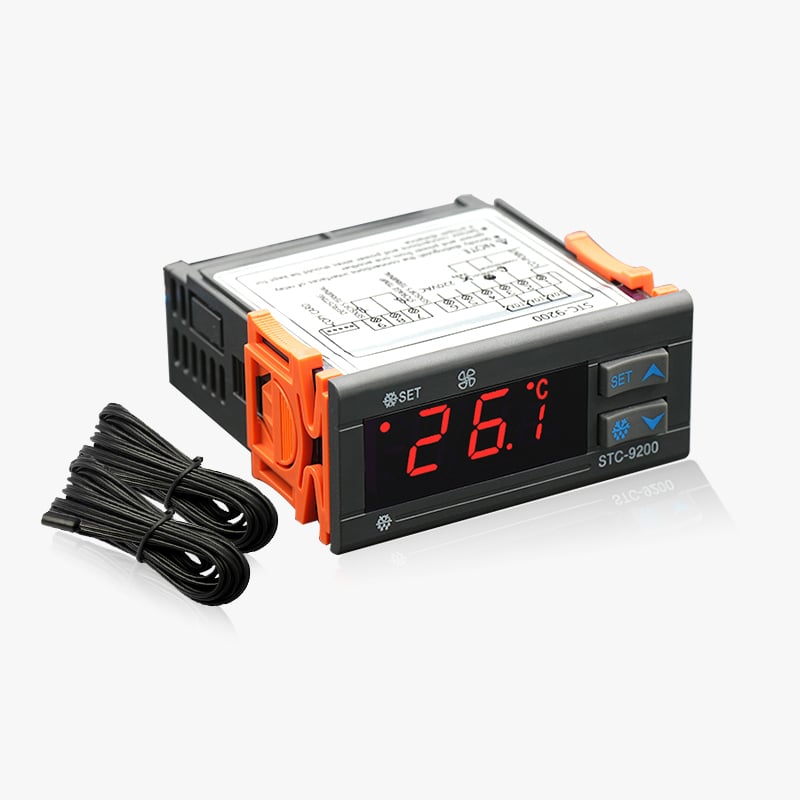
Modern commercial refrigeration demands more than basic on-off switching. A robust temperature controller must handle complex staging requirements, multiple sensor inputs, and adaptive algorithms that respond to real-world load variations. Legacy units like the STC-1000 lack the advanced features that facility operators now expect, including remote monitoring, predictive maintenance capabilities, and integration with building management systems. Choosing the right temperature controller replacement requires understanding core performance criteria, feature depth, and long-term total cost of ownership rather than focusing solely on initial purchase price.
Key Performance Criteria for Modern Temperature Controller Selection
Precision and Stability in Temperature Control
A premium temperature controller maintains setpoint accuracy within 0.5°C or better, preventing the wide oscillations that characterize older designs. This precision directly impacts product quality, shelf life extension, and regulatory compliance for food storage applications. When a temperature controller overshoots and undershoots excessively, compressor cycling increases dramatically, driving up energy consumption and accelerating equipment wear. Advanced tuning algorithms in modern units allow a temperature controller to learn system behavior and automatically adjust heating and cooling rates, delivering stable conditions even when ambient temperature or load changes suddenly.
Multi-Stage Capacity and Flexibility
Superior temperature controller designs support staged compressor control, electric heating elements, and auxiliary cooling stages simultaneously. This means a single temperature controller can manage capacity modulation rather than crude on-off cycling, reducing energy consumption by 15–25% compared to simple controllers. When evaluating a temperature controller alternative, verify it can handle your specific equipment configuration, including the number of compressor stages, heater circuits, and defrost mechanisms your system requires. A flexible temperature controller grows with your facility and eliminates costly rewiring if equipment upgrades occur.
Advanced Features That Justify Temperature Controller Investment
Digital Monitoring and Remote Access Capabilities
Modern temperature controller systems feature built-in data logging, real-time cloud connectivity, and mobile app interfaces that enable proactive management. A connected temperature controller sends alerts when setpoint drift occurs, sensor failures develop, or maintenance is due, allowing preventive action before product loss happens. Many facilities find that a temperature controller with remote viewing capability reduces emergency calls and speeds troubleshooting, since technicians can diagnose issues before arriving on-site. These capabilities transform a temperature controller from a passive device into an active management tool that improves operational visibility and reduces downtime significantly.
Integrated Diagnostics and Fault Tolerance
An advanced temperature controller includes redundant sensors, automatic sensor validation, and intelligent fallback modes that maintain safe operation during hardware faults. When a temperature controller detects a sensor anomaly, it can alert staff while continuing to operate using secondary sensor data or predictive algorithms. This fault tolerance ensures that a malfunctioning temperature controller never causes uncontrolled temperature swings or food safety violations. Superior temperature controller units also provide detailed error codes and diagnostic information that simplify repairs and reduce service call costs.
Evaluating Long-Term Operating Costs and Reliability
Energy Efficiency and Cost Reduction Impact
An upgraded temperature controller often pays for itself within 18–36 months through reduced compressor runtime and optimized defrost cycles. Modern temperature controller algorithms adjust heating and cooling rates dynamically, preventing energy waste during part-load operation common in commercial refrigeration. When comparing temperature controller options, calculate the annual energy impact by considering compressor hours, defrost frequency, and standby power consumption. A temperature controller that reduces cycling losses by just 20% can save thousands annually in electricity costs for large refrigeration systems.
Durability, Support, and Warranty Considerations
Premium temperature controller manufacturers stand behind their products with extended warranties, responsive technical support, and readily available replacement components. When selecting a temperature controller alternative, verify the manufacturer offers local support, spare parts availability, and firmware updates that extend product lifespan. A reliable temperature controller supplier provides clear documentation, training resources, and troubleshooting guides that reduce dependency on expensive external service calls. Choosing a temperature controller from an established provider ensures you have access to technical expertise and parts for many years.
FAQ
What makes a temperature controller better than the STC-1000?
A superior temperature controller offers precision control within 0.5°C or better, multi-stage capacity management, remote monitoring capabilities, and advanced diagnostics that the STC-1000 cannot provide. Modern temperature controller units reduce energy consumption by 15–25%, integrate with building management systems, and feature intelligent fault detection that prevents product loss. The temperature controller technology has evolved significantly, and upgrading delivers measurable improvements in reliability, efficiency, and operational control.
How do I calculate the return on investment for a temperature controller upgrade?
Compare annual energy costs using your current system versus projected consumption with an advanced temperature controller, then add estimated maintenance savings and product loss reduction. Most facilities see a temperature controller investment repay within 18–36 months through energy savings alone. Include the cost of downtime prevention and improved food safety compliance in your analysis, as these soft benefits often exceed the direct energy savings associated with a temperature controller upgrade.
Can a new temperature controller work with my existing refrigeration equipment?
Most modern temperature controller designs are compatible with standard compressor configurations, electric heating elements, and defrost timers, but verification is essential. Before purchasing a temperature controller replacement, consult with the manufacturer or a qualified technician to confirm compatibility with your specific equipment, sensor types, and control requirements. A well-designed temperature controller installation typically requires only basic wiring modifications and can integrate seamlessly into existing systems.